
Track · Advanced
AI & Machine Learning
Train real models on real problems.
From your first straight-line model to neural networks, language models and responsible deployment — every concept built, run, and tested by you.
- Modules
- 11
- Labs
- 48
- Projects
- 6
- Activities
- 365
The journey
11 modules, one skill at a time
- 1
Scientific Python
4 labs
From raw CSV to real insight
- 2
Maths for ML, hands-on
4 labs
The maths behind the magic
- 3
How models learn
4 labs
Models you can trust
- 4
Supervised learning
6 labs
A classifier you can defend
- 5
Features & pipelines
3 labs
Production-ready preprocessing
- 6
Unsupervised learning
4 labs
Patterns without answers
- 7
Time series & forecasting
3 labs
Forecasts you can stand behind
- 8
Neural networks
5 labs
Neural networks, demystified
- 9
Language & LLMs
7 labs
You know how machines read
- 10
Responsible AI & deployment
5 labs
Ready for the real world
- 11
Tools of the trade
3 labs
Ready for real ML work
What you'll build
6 projects from real local data
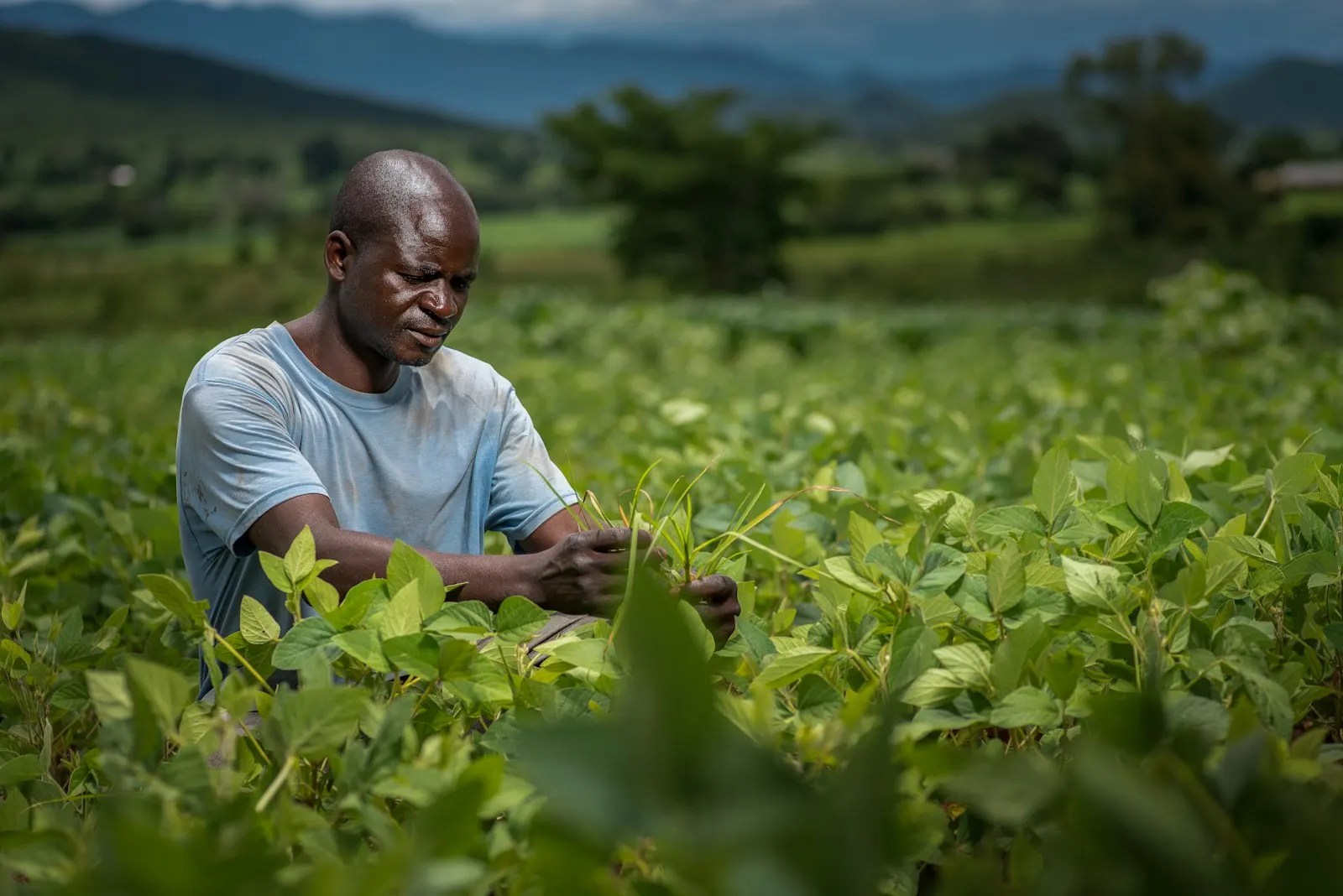
Project · Module 4
Blight Early Warning
A county agriculture office wants to know which maize fields to visit before blight spreads. Build, tune and defend an early-warning classifier end to end.

Project · Module 6
Mobile-Money Fraud Watch
A mobile-money provider's fraud team can review 25 transactions a day. Build the detector that fills their queue — with no fraud labels to train on — and report what it catches and what it costs.

Project · Module 7
Market Price Forecast
A traders' association in Nairobi wants next year's monthly maize prices at Gikomba market to plan storage and sales. Build a forecast that beats the baseline, and deliver it with honest caveats.
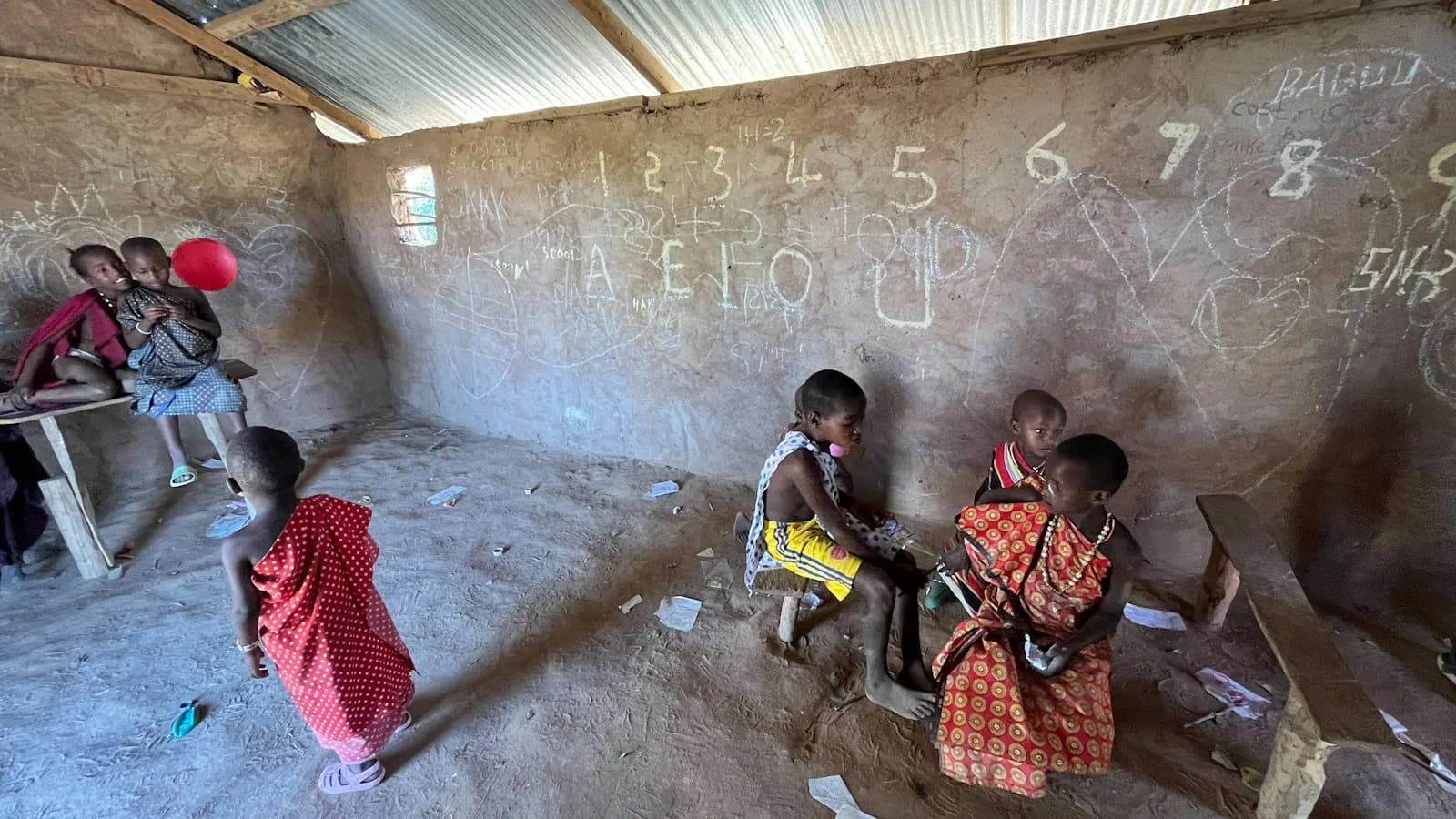
Project · Module 8
Handwritten Digit Reader
A savings group wants to digitise years of handwritten ledger entries. Train a digit reader on real handwriting, find where it fails, and design a workflow where people check what the model isn't sure about.

Project · Module 9
Customer Feedback Assistant
An agri-supplies company gets hundreds of reviews a month in English and Swahili. Build a tool that flags unhappy customers, finds what they're unhappy about, and drafts a grounded reply.

Project · Module 10
Responsible Lending Audit
The lender wants to launch its credit model nationwide. Audit it end to end — accuracy, fairness, explanations — choose a policy you can defend, and publish a model card.
Syllabus
Every module and lab
- Lesson
- Interactive
- Quiz
- Trace
- Puzzle
- Find the bug
- Scenario
- Practice
- Challenge
- Reflect
Scientific Python
NumPy, pandas and matplotlib — the tools every ML project is built on.
4 labs · 32 activities
Lab 01 · Arrays & vectorisation
NumPy: Whole Columns at Once
Machine learning is maths on thousands of numbers at once. NumPy arrays let you do it in one line — no loops — and they're what every ML library runs on underneath.
35 min8 activitiesLab 02 · DataFrames
pandas: Tables You Can Question
pandas is the spreadsheet of data science. Load 80 farms, select, filter, group and clean them — the everyday moves before any model is trained.
40 min8 activitiesLab 03 · matplotlib
Visualising Data
A chart shows in a second what a table hides. Learn to pick the right chart for the question and draw it with matplotlib — scatter, bar, line and histogram.
40 min8 activitiesLab 04 · EDA
Exploratory Data Analysis
Before any model: get to know your data. Summaries, distributions, outliers and correlations — and the discipline to say what the data does and doesn't show.
45 min8 activities
Milestone 1
From raw CSV to real insight
You can load, clean, summarise and chart a dataset — and say what it does and doesn't show.
Maths for ML, hands-on
The maths models run on — built with code and sliders, not proofs.
4 labs · 32 activities
Lab 05 · Linear algebra
Vectors & Matrices
A model's prediction is a weighted sum of its inputs — a dot product. Stack many examples into a matrix and one multiplication predicts them all.
35 min8 activitiesLab 06 · Distributions & spread
Statistics That Matter
Mean, median, standard deviation, the normal distribution, and why a sample never tells you the exact truth — the statistics every model result leans on.
35 min8 activitiesLab 07 · Conditional probability
Probability & Bayes
Why a positive test can still be unlikely, how spam filters think, and how to reason about uncertainty with simulation and Bayes' rule.
35 min8 activitiesLab 08 · Loss & gradient descent
Gradients & Optimisation
How does a model find its best weights? It measures how wrong it is, feels which way is downhill, and takes a step. That's gradient descent — the engine of almost all machine learning.
35 min8 activities
Milestone 2
The maths behind the magic
You can read the maths in an ML explanation and see what it does in code.
How models learn
What training actually is, and how to test a model honestly.
4 labs · 32 activities
Lab 09 · Linear Regression
Rainfall & Crop Yield
Predict maize yield from rainfall on smallholder farms in Nakuru County — and see exactly what “training a model” means.
35 min8 activitiesLab 10 · Training loops
Gradient Descent from Scratch
Train a linear regression model the way neural networks are trained: compute the gradient, step, repeat — and watch the loss fall epoch by epoch.
40 min8 activitiesLab 11 · Generalisation
Overfitting & Regularisation
A model that memorises its training data fails on new data. Learn to spot overfitting from train and test error, and to rein it in with regularisation.
40 min8 activitiesLab 12 · Honest evaluation
Cross-Validation
One train/test split can flatter or punish a model by luck. Cross-validation tests on every slice of the data in turn — the standard way to compare models honestly.
40 min8 activities
Milestone 3
Models you can trust
You can train a model by gradient descent, spot overfitting, and compare models with honest cross-validated scores.
Supervised learning
The workhorse models for predicting categories — and how to measure them honestly.
6 labs · 46 activities
Lab 13 · Classification
Logistic Regression
Your first classifier: predict whether a maize field will get blight, as a probability — and learn why 77% accuracy can be worthless.
40 min8 activitiesLab 14 · Precision, recall, ROC
Measuring Classifiers
Accuracy hides the mistakes that matter. Confusion matrices, precision, recall, F1, ROC curves — and choosing a threshold for the job the model actually has to do.
40 min8 activitiesLab 15 · Distance-based learning
k-Nearest Neighbours
Predict from the most similar past examples. k-NN is the simplest model there is — and the clearest demonstration of why feature scaling matters.
35 min8 activitiesLab 16 · Tree models
Decision Trees & Random Forests
Models that ask a series of yes/no questions — readable enough to print as rules. Then why a forest of trees beats any single one.
40 min8 activitiesLab 17 · Boosted trees
Gradient Boosting
Trees trained one after another, each fixing the last one's mistakes. Gradient boosting — and XGBoost — dominate tabular-data competitions. Learn how, and when it's worth it.
40 min8 activitiesProject · Capstone
Blight Early Warning
A county agriculture office wants to know which maize fields to visit before blight spreads. Build, tune and defend an early-warning classifier end to end.
60 min6 activities
Milestone 4
A classifier you can defend
You can build, compare and tune classifiers, choose thresholds from real costs, and ship a capstone early-warning model.
Features & pipelines
Turning raw columns into inputs a model can learn from — without cheating.
3 labs · 24 activities
Lab 18 · Preparing features
Encoding & Scaling
Models only understand numbers on sensible scales. Turn categories into numbers without inventing fake orders, scale numeric columns, and handle categories you've never seen.
35 min8 activitiesLab 19 · Creating inputs
Feature Engineering
Often the biggest gains don't come from a fancier model but from better inputs. Craft features that encode what you know about the problem — and measure whether they help.
40 min8 activitiesLab 20 · Trustworthy workflows
Data Leakage & Pipelines
The bug that makes models look brilliant and fail in the field. Spot leakage, then build end-to-end pipelines that prepare raw data and predict in one honest step.
45 min8 activities
Milestone 5
Production-ready preprocessing
You can encode, scale and engineer features, spot leakage, and wrap it all in a pipeline that takes raw data.
Unsupervised learning
Finding structure when there are no labels — segments, compressions and anomalies.
4 labs · 30 activities
Lab 21 · Clustering
k-Means Clustering
No labels, just data: let the algorithm group 250 mobile-money customers by behaviour, choose how many groups there really are, and describe what each one means.
40 min8 activitiesLab 22 · Dimensionality reduction
PCA: Seeing Many Columns at Once
Squeeze six customer features into two directions that keep most of the information — to plot high-dimensional data, compress it, and see the clusters for yourself.
35 min8 activitiesLab 23 · Finding the unusual
Anomaly Detection
Fraud is rare and rarely labelled. Hunt for suspicious mobile-money transactions with rules, z-scores and Isolation Forests — and learn why "unusual" and "fraudulent" aren't the same thing.
40 min8 activitiesProject · Capstone
Mobile-Money Fraud Watch
A mobile-money provider's fraud team can review 25 transactions a day. Build the detector that fills their queue — with no fraud labels to train on — and report what it catches and what it costs.
60 min6 activities
Milestone 6
Patterns without answers
You can segment, compress and hunt anomalies in unlabelled data — and ship a fraud review queue.
Time series & forecasting
Predicting what comes next from what came before — honestly.
3 labs · 21 activities
Lab 24 · Time series
Trends & Seasonality
Eight years of maize prices. Pull the series apart into its long-term trend, its yearly rhythm and the shocks that fit neither — the first step of any forecast.
40 min8 activitiesLab 25 · Predicting the future
Forecasting
Predict next year's prices — honestly. Build baselines, a regression with trend and seasonal features, test on a held-out year, and deal with the shock in the training data.
45 min8 activitiesProject · Capstone
Market Price Forecast
A traders' association in Nairobi wants next year's monthly maize prices at Gikomba market to plan storage and sales. Build a forecast that beats the baseline, and deliver it with honest caveats.
60 min5 activities
Milestone 7
Forecasts you can stand behind
You can decompose a series, beat seasonal baselines on held-out time, and deliver a forecast with its uncertainty.
Neural networks
From a single neuron to image classifiers — built from scratch so nothing is magic.
5 labs · 38 activities
Lab 26 · One artificial neuron
The Perceptron
Build the single artificial neuron that started it all, train it with the perceptron rule — and hit the wall that stalled AI for over a decade.
35 min8 activitiesLab 27 · How networks learn
Backpropagation
How does a network with thousands of weights know which ones to change? The chain rule, applied backwards. Build it by hand — and train a two-layer network that solves XOR.
45 min8 activitiesLab 28 · Deep learning in practice
Multi-Layer Networks
Stack layers, pick activations, choose an optimiser — and train real neural networks with scikit-learn. Plus how to read a loss curve and stop a network overfitting.
40 min8 activitiesLab 29 · Computer vision basics
Convolutions & Images
To a computer an image is a grid of numbers. Slide small filters over it to find edges and shapes — the idea behind every image-recognition system — using real handwritten digits.
40 min8 activitiesProject · Capstone
Handwritten Digit Reader
A savings group wants to digitise years of handwritten ledger entries. Train a digit reader on real handwriting, find where it fails, and design a workflow where people check what the model isn't sure about.
60 min6 activities
Milestone 8
Neural networks, demystified
You've written backpropagation from scratch, trained networks that beat linear models, built a convolution by hand, and shipped a digit reader with a human-review workflow.
Language & LLMs
How machines read — from word counts to transformers and today's large language models.
7 labs · 50 activities
Lab 30 · Tokens and vocabularies
Text as Data
Models only understand numbers. Take 400 real-sounding customer reviews in English and Swahili, break them into tokens, and count what people talk about.
35 min7 activitiesLab 31 · Counting words
Bag of Words & TF-IDF
Turn every review into a row of numbers by counting its words — then weight the counts so the words that actually distinguish one text from another stand out.
40 min8 activitiesLab 32 · Classifying text
Sentiment Classification
Train a model that reads a review and says whether the customer is happy — then open it up, see the words it relies on, and find where word-counting breaks down.
40 min7 activitiesLab 33 · Words as vectors
Word Embeddings
Give every word a list of numbers so that words used alike sit close together. Build embeddings from scratch from the reviews — and discover what they capture and what they miss.
40 min7 activitiesLab 34 · Context
Attention & Transformers
The idea behind every modern language model: let each word look at the others and decide which ones matter. Build scaled dot-product attention in NumPy, line by line.
45 min8 activitiesLab 35 · Language models
How LLMs Work
Build a tiny language model that writes reviews, see why it confidently makes things up, and fix that the way real AI assistants do: by retrieving facts and putting them in the prompt.
50 min8 activitiesProject · Capstone
Customer Feedback Assistant
An agri-supplies company gets hundreds of reviews a month in English and Swahili. Build a tool that flags unhappy customers, finds what they're unhappy about, and drafts a grounded reply.
60 min5 activities
Milestone 9
You know how machines read
From tokens to TF-IDF, sentiment models, embeddings and attention — and you can explain how an LLM generates text, why it hallucinates, and how retrieval grounds it.
Responsible AI & deployment
Building models that are fair, explainable and actually used.
5 labs · 36 activities
Lab 36 · Who does the model fail?Thinking lab
Bias & Fairness
A digital lender's model never sees where applicants live — yet it turns down rural customers who repay just as reliably. Measure the bias, find where it comes from, and reduce it.
40 min8 activitiesLab 37 · Why did the model decide that?
Explainability
An applicant was turned down and wants to know why. Explain the model globally — which features matter — and locally — why this person — and tell them what would have changed the answer.
40 min8 activitiesLab 38 · Protecting the people in the dataThinking lab
Privacy & Data Ethics
Removing names doesn't make data anonymous. Re-identify people in a "de-identified" dataset, then decide what can safely be shared, and in what form.
35 min8 activitiesLab 39 · Models in the real world
Deploying & Monitoring
A model in a notebook helps nobody. Save it, wrap it in a function an app can call safely, and set up the monitoring that catches the day the world changes under it.
45 min7 activitiesProject · Capstone
Responsible Lending Audit
The lender wants to launch its credit model nationwide. Audit it end to end — accuracy, fairness, explanations — choose a policy you can defend, and publish a model card.
60 min5 activities
Milestone 10
Ready for the real world
You can audit a model for fairness, explain its decisions, protect the people in its data, deploy it safely and monitor it — and document all of it in a model card.
Tools of the trade
The tools ML engineers use every day: Hugging Face, PyTorch, notebooks, GPUs and experiment tracking.
3 labs · 24 activities
Lab 40 · Using pretrained models
Hugging Face: Models & the Hub
Most AI products start from a pretrained model, not from scratch. Run a real Hugging Face model in your browser, explore the Hub's Swahili models like a practitioner — tasks, licences, sizes — and shortlist the right one for a job.
45 min9 activitiesLab 41 · Deep-learning frameworks
From NumPy to PyTorch
PyTorch is the framework behind most modern AI. You already know what it does — you built it by hand in NumPy. Map every line of a PyTorch training loop to your own code, build a mini PyTorch, and write the autograd engine at its heart.
45 min8 activitiesLab 42 · Working like an ML engineer
Experiments, Notebooks & GPUs
Real ML work is dozens of experiments. Make yours reproducible, track every run so you can say which model was best and why, and learn how seeds and splits can fool you — the habits behind tools like MLflow and Weights & Biases.
40 min7 activities
Milestone 11
Ready for real ML work
You can find and vet pretrained models on Hugging Face, read and reason about PyTorch code, run models in Colab, and run reproducible, well-tracked experiments.